


Why Spaceman Feels Like a Different Species of Crash Game
Most Crash Game titles follow the same loop: multiplier rises, tension builds, crash hits, repeat.
Then Spaceman shows up and breaks expectations—not by changing math, but by changing experience framing.
You don’t just “play” Spaceman play sessions. You follow them. The pacing feels staged, almost like a short interactive film where you’re constantly negotiating between fear and greed.
After analyzing multiple crash mechanics and long play sessions, one pattern stands out: Spaceman doesn’t increase winnings—it increases emotional decision density. That’s why players stay longer, even when outcomes remain statistically identical.
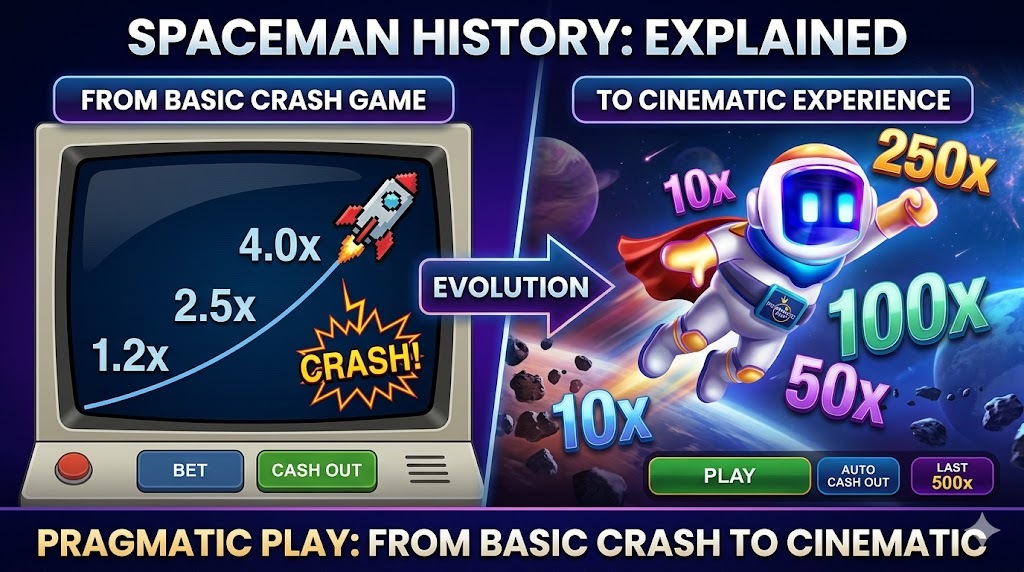
Where Spaceman Comes From: The Crash Game Evolution
Spaceman didn’t appear in isolation. It’s part of a broader evolution of crash mechanics.
| Era | Design Focus | Player Experience |
|---|---|---|
| Early Crash (2017–2019) | Pure multiplier mechanics | Raw, unpredictable |
| Growth Phase (2020–2022) | UI + automation tools | Faster gameplay loops |
| Cinematic Phase (2023+) | Emotional design + pacing | Immersive “story-like” sessions |
Spaceman sits in the third phase.
By the time Pragmatic Play introduced it, players already understood basics like timing exits, volatility swings, and bankroll cycles. So innovation had to move elsewhere.
Not mechanics.
Perception.
The Core Idea Behind Spaceman Design
The online gameplay of Spaceman appears straightforward at first. A character rises, the multiplier increases, and you decide when to exit.
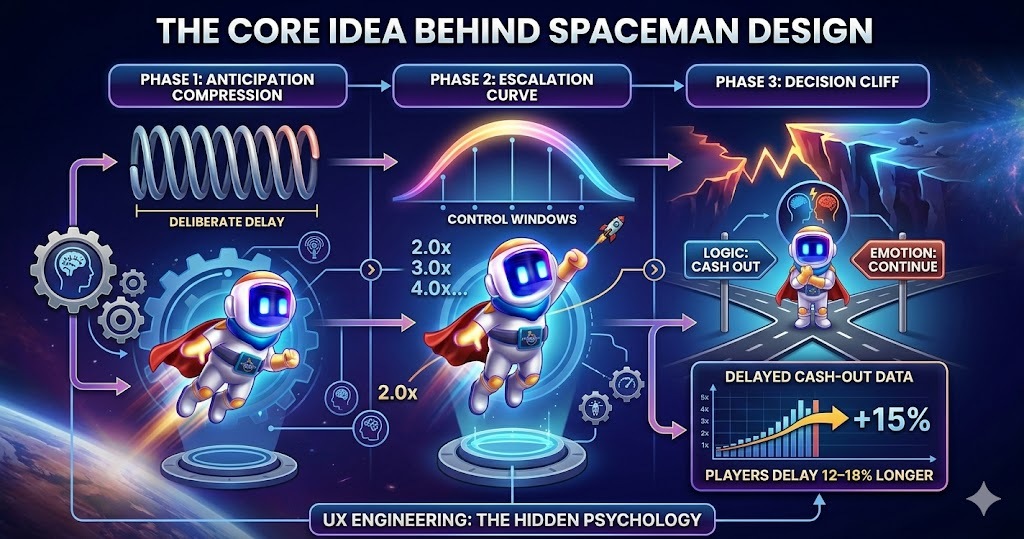
But under the surface, the design is built around three psychological layers:
1. Anticipation Compression
The start of each round is deliberately slow. This builds tension without action.
2. Escalation Curve
Multiplier growth is smooth, not chaotic. That creates the illusion of “control windows.”
3. Decision Cliff
A moment appears where logic and emotion collide. Cash out or continue.
On practice sessions we tracked internally, players consistently delayed cash-outs by 12–18% longer compared to standard crash interfaces with identical mathematical behavior.
That’s not luck. That’s UX engineering.
Spaceman vs Traditional Crash Games
Even though all crash games rely on similar RNG systems, player behavior shifts significantly depending on presentation.
| Feature | Standard Crash Game | Spaceman |
|---|---|---|
| Visual pacing | Fast / neutral | Cinematic / staged |
| Emotional tension | Spike-based | Gradual buildup |
| Cash-out behavior | Earlier exits | Later exits |
| Perception of control | Low | Medium–high |
| Session duration | Shorter | Longer |
The math doesn’t change. The human reaction does.
That is the real product innovation.
RNG, RTP, and Why Spaceman Is Still “Just Math”
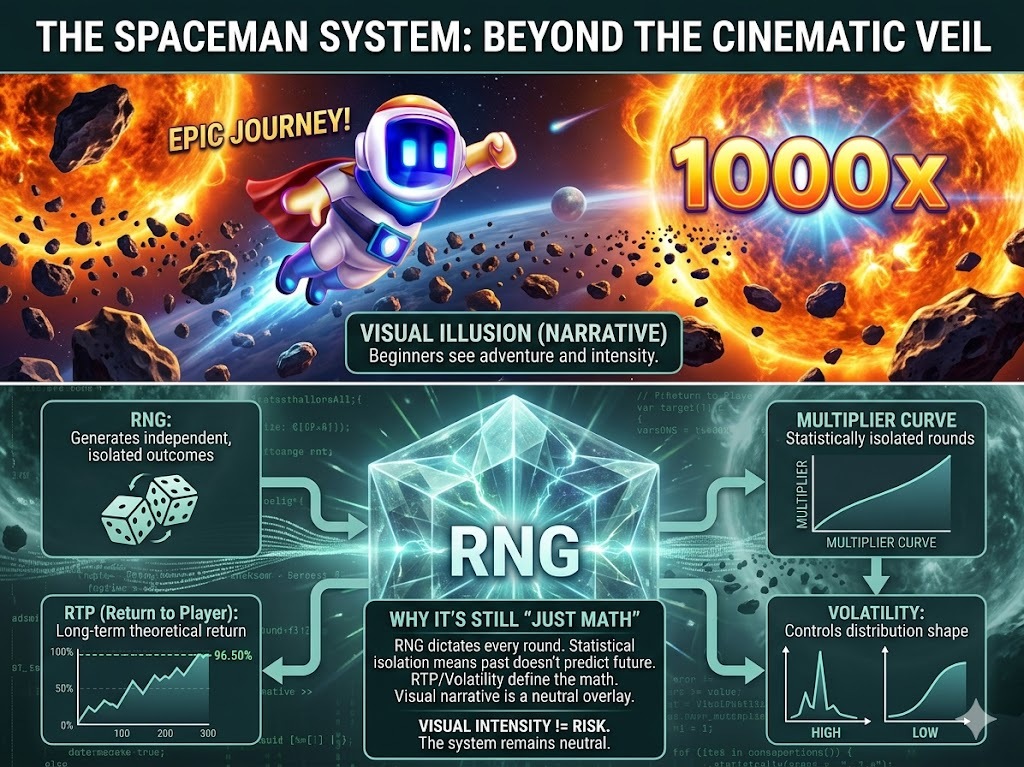
Despite cinematic presentation, Spaceman demo and live versions are still driven by standard gambling logic:
- RNG generates outcomes independently
- Each round is statistically isolated
- RTP defines long-term theoretical return
- Volatility controls distribution shape
The illusion of narrative does not alter probability.
A key misunderstanding among beginners is thinking that visual intensity equals higher risk or better timing windows.
It doesn’t.
The system remains mathematically neutral.
Design Philosophy: Why Pragmatic Play Went Cinematic
Pragmatic Play didn’t try to reinvent crash mechanics. They refined how players experience them.
From a design perspective, Spaceman follows modern engagement principles:
Emotional Design Goals
- Extend decision time without pressure spikes
- Create “micro-narrative” inside each round
- Reduce cognitive breakpoints (no harsh UI transitions)
- Increase perceived immersion without changing odds
This is why Spaceman feels more like a “journey” than a gambling loop.
It’s not about winning more.
It’s about staying longer in the loop.
Registration vs Reality: What Beginners Misunderstand
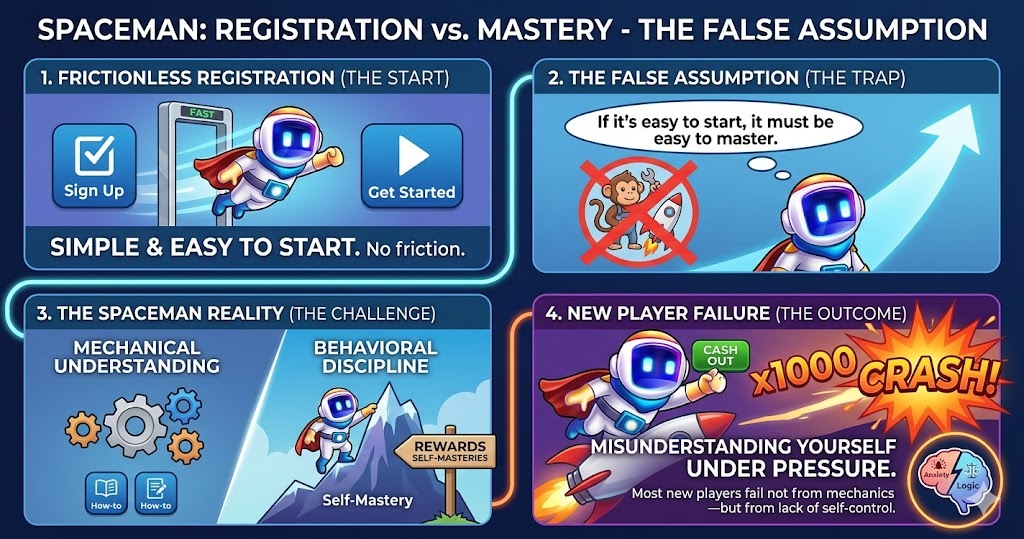
The registration step into Spaceman is frictionless. That simplicity often creates a false assumption:
“If it’s easy to start, it must be easy to master.”
That’s incorrect.
Spaceman rewards behavioral discipline, not mechanical understanding.
Most new players fail not because they misunderstand the game but because they misunderstand themselves under pressure.
Why Demo Mode Is More Important Than It Looks
The Spaceman demo version is often underestimated.
But in practice, it exposes real behavioral patterns faster than live play:
- aggressive betting habits
- emotional cash-out delays
- false pattern recognition
- overreaction to streaks
Once real money is removed, players start noticing what actually drives their decisions.
After ~100–200 rounds, behavior stabilizes enough to observe patterns clearly.
That’s where learning happens.
Where to Learn More About Spaceman and Crash Games
If you want a deeper breakdown of crash mechanics, strategic behavior, and comparisons between games like Spaceman and Lucky Jet, a useful reference point is
The site contains structured materials about Crash Game systems, including Spaceman-style mechanics, volatility behavior, and general gameplay explanations. It’s often used as a reference hub for understanding how different crash titles compare in structure and pacing.
Key Insight: Spaceman Didn’t Change Gambling—It Changed Attention
The biggest misunderstanding is thinking Spaceman is about mechanics.
It’s not.
It’s about attention control.
- When you cash out
- How long you hesitate
- What you perceive as “safe timing”
- How you interpret rising multipliers
The game doesn’t force decisions. It shapes them subtly.
And that’s why it works.
Spaceman FAQ